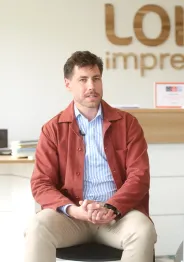
DirectPrint, a premium printing house in Casablanca, Morocco, is not your typical print shop. Specializing in a vast and highly technical range of products—from art books and business cards to shoe boxes, flexo, and shrink packaging—their success relies entirely on technical mastery and uncompromising quality.
Yet, like many high-end printers today, DirectPrint faced a core challenge that threatened their reputation and profit margins: the steep and continuous decline in the quality of incoming customer files.
The Critical Problem: Declining File Quality Costs Time and Trust
The printing industry has changed significantly. As DirectPrint’s owner explains, a shift towards web-centric design means print files often arrive with fundamental errors, such as being submitted in RGB color space for printing.
This drop in quality presented the company with a choice:
"There are two solutions: we take the file, we print, and one in three times we have a conflict with the customer. Either we take the file and arrange it. It's part of the service and we have no conflict with the customer."
Younes Benchekroun, Owner of DirectPrint, Casablanca
DirectPrint chose the latter, positioning file optimization as a crucial premium service. However, manually fixing files wastes precious time that the owner calls "somewhat stupid work, somewhat without added value".
The real pain point? The time lost due to rework:
"Making and redoing is very easy... but display varnish, go to the varnisher and realize that there is an offset of a millimeter and come back and redo the file... we lost time and it is this time that we must gain. It is this reliability that must be gained."
Younes Benchekroun, Owner of DirectPrint, Casablanca
The Enfocus Solution: Automation for Reliability and Comfort
Recognizing that this need to automate was "crucial" and "became clear", DirectPrint, a long-time user of Enfocus PitStop, quickly turned to Enfocus Switch to build sophisticated automation workflows.
While saving time is a benefit, the primary driver for implementing Switch was focused on the bigger picture:
"Saving time is good, but what is more important is gaining user comfort and reliability in what we do."
Younes Benchekroun, Owner of DirectPrint, Casablanca
By automating the tedious and error-prone file checks, DirectPrint is able to:
- Free up Experts: Their dedicated eight-person studio now focuses on the most complex retouching and technical details, not routine corrections.
- Guarantee Quality: The workflow ensures that files destined for their diverse range—from offset brochures to complex flexo labels—meet the company’s strict premium standards before they hit the press.
Future-Proofing the DirectPrint Team
Automation is also proving essential for staff development and retention. With the pool of print-savvy DTP experts shrinking, DirectPrint views their automated workflow as an invaluable training tool.
The owner noted that hiring a young person with no printing expertise could take much longer than three to four months to bring them up to speed. However, with Switch handling the non-expert tasks:
"If I automate a certain number of things where I don't really need much expertise, maybe it will be operational after three months."
Younes Benchekroun, Owner of DirectPrint Casablanca
The Owner’s Biggest Regret: Don't Wait to Automate
While DirectPrint's journey is a success story, the owner shares a profound piece of advice for other printing companies still relying on manual prepress:
"My biggest regret, honestly, is that I let time pass when I should have done that seven, eight years ago... I was missing the point. Whereas now that I've dug in and I see a little bit of the potential there is in this, it's incredible."
Younes Benchekroun, Owner of DirectPrint Casablanca
Though DirectPrint is only at an estimated 30% of their ultimate automation goal, the impact on their reliability and user comfort has already transformed their operations.